
Xander Ludwig · 17 September 2026
Optimizing Dynamic Filter Systems for Scalable Product Discovery in Niche Marketplaces
Niche marketplaces handle specialized inventories that range from vintage electronics to rare botanical specimens, and dynamic filter systems adjust in real time to user behavior while maintaining performance as catalogs expand. These systems combine attribute-based queries with behavioral signals so shoppers locate items without sifting through thousands of irrelevant results, and data from multiple platforms shows that well-tuned filters reduce bounce rates by measurable margins.
Core Components of Dynamic Filters
Dynamic filters rely on layered taxonomies that update when new products enter the catalog, and they incorporate user context such as location, device type, and previous searches. Backend services index attributes like material composition, compatibility standards, and rarity indicators, then surface them through faceted navigation that changes based on current inventory levels. Researchers at institutions across North America have documented how these layers interact, and their findings indicate that synchronized indexing prevents filter lag even when daily uploads reach several thousand new listings.
Scalability Challenges in Growing Catalogs
As niche platforms attract more sellers, filter response times can degrade because each additional attribute multiplies the number of possible combinations. Observers note that query complexity increases nonlinearly, and systems without proper sharding experience slowdowns during peak hours. Statistics Canada reports on digital commerce highlight similar patterns in specialized retail segments, where marketplaces handling under 50,000 SKUs initially scale smoothly but encounter bottlenecks once listings exceed 200,000. Engineers address this through distributed indexing and precomputed result sets that refresh at scheduled intervals rather than on every request.
Techniques for Performance Optimization
Teams apply caching strategies that store frequent filter combinations in memory while invalidating entries when stock changes occur, and they use machine learning models to predict which attributes users will combine next. These models train on historical click data so the interface prioritizes likely paths without requiring full database scans. One approach involves hierarchical clustering of product attributes, which groups related filters and reduces the depth of decision trees that algorithms must traverse. European Commission analyses of digital marketplaces describe how such clustering has lowered average query latency in tested environments by 30 to 40 percent when implemented correctly.
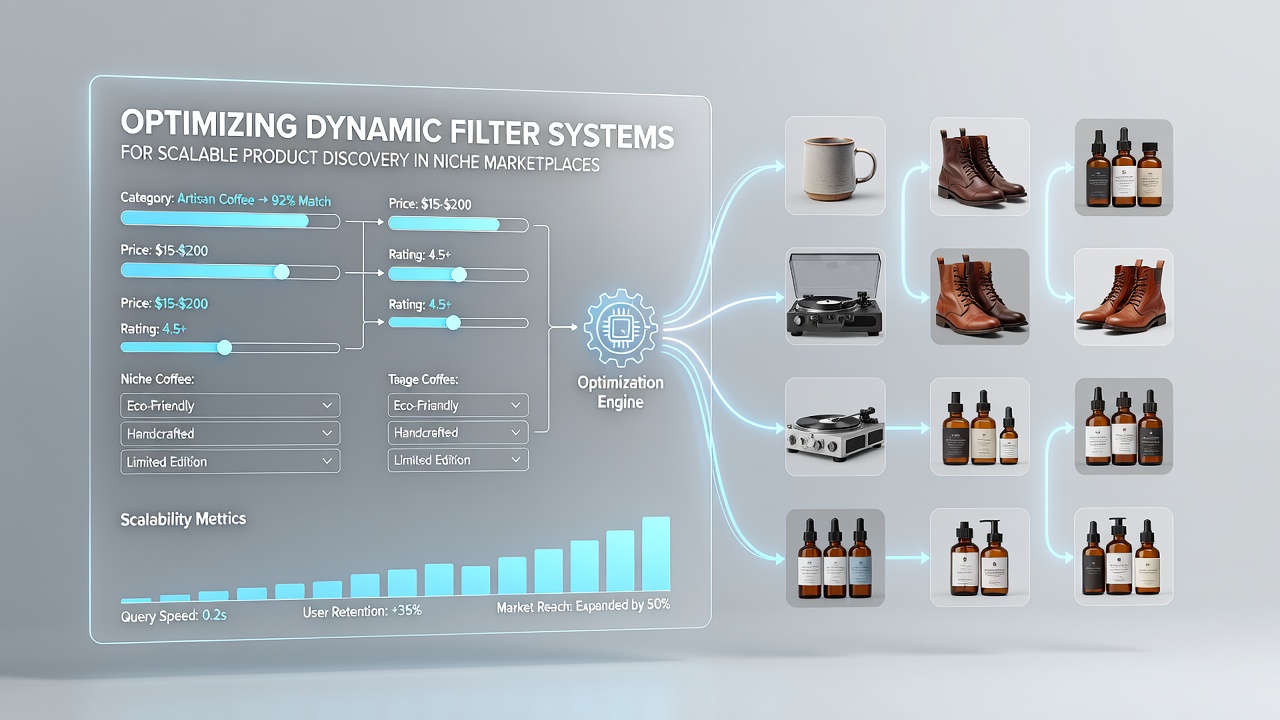
Load balancing across regional servers further distributes query volume, and asynchronous processing queues handle heavy updates during off-peak windows. Developers also implement progressive disclosure so initial filter sets remain lightweight, then expand with additional options only after users select primary categories. This staged approach keeps initial page loads under two seconds even as total catalog size grows.
Integration with Search and Recommendation Layers
Dynamic filters operate alongside full-text search and collaborative filtering engines, and synchronization between these components determines overall discovery effectiveness. When a user applies a material filter, the recommendation layer should adjust its suggestions to match the narrowed set rather than displaying unrelated popular items. Platforms achieve this by sharing a common attribute graph that all discovery modules reference, and updates propagate through event streams so consistency holds across services. Data shows that marketplaces maintaining this shared graph achieve higher conversion rates because users encounter coherent result sets at every stage of their session.
Developments Expected by September 2026
Industry roadmaps point toward wider adoption of vector embeddings within filter systems, allowing semantic matching of attributes that traditional keyword indexes miss. By September 2026, several platforms plan to roll out embedding-based refinement that surfaces products described with varying terminology yet sharing functional properties. Early tests in controlled environments indicate these methods improve recall without sacrificing precision, and regulatory frameworks in multiple regions already encourage transparent handling of algorithmic ranking signals.
Conclusion
Effective optimization of dynamic filter systems rests on coordinated indexing, predictive modeling, and tight integration with other discovery tools, and evidence from operational marketplaces confirms these elements support growth without proportional increases in response time. Continued monitoring of query patterns and inventory shifts allows teams to refine configurations as conditions evolve.